How we confirmed his service
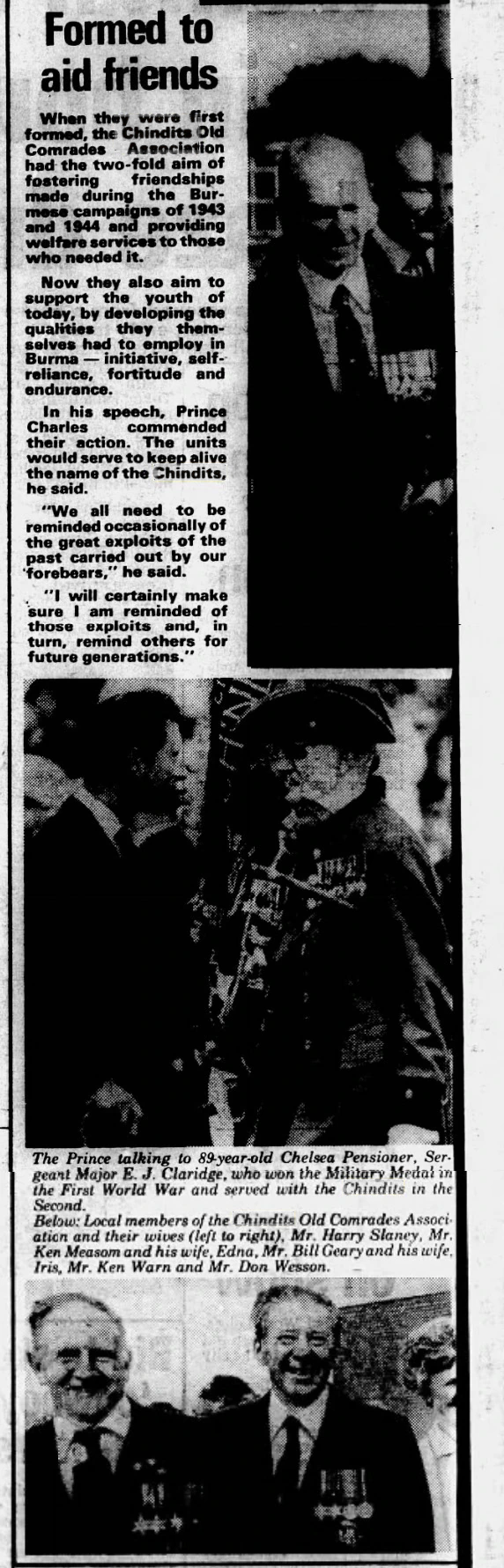
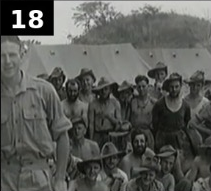
His published wartime recollections describe serving in 13 Platoon, 71 Column. His daughter Brenda identified him in Calling Blighty No. 155.
Calling Blighty film still
Service and life
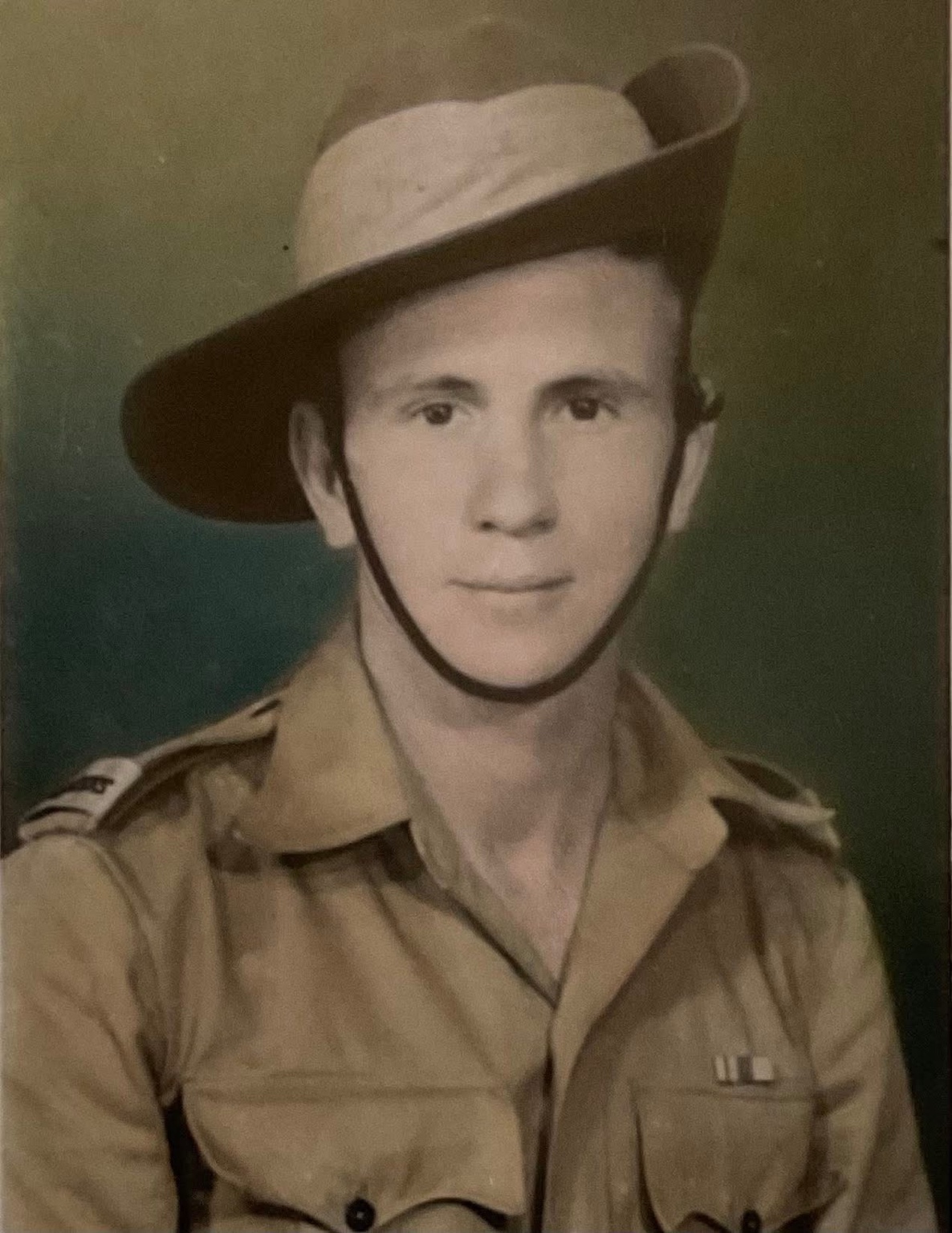
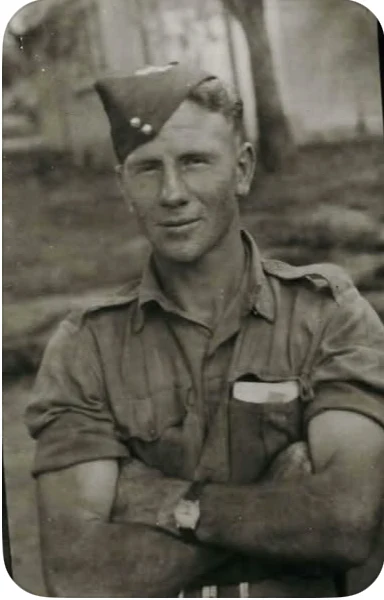
William Henry “Harry” Slaney was born on 28 December 1918. He was called up at Glen Parva Barracks on 15 November 1939, aged 20. After his initial training at Glen Parva and a move to Park Road, Blaby, he volunteered for the Middle East. He joined the 2nd Battalion, Leicestershire Regiment, at Jericho on 22 February 1940.
Harry’s account follows the battalion into the Western Desert and then to Crete in May 1941. He remembered sheltering beneath A turret when a dive bomber hit B turret on HMS Dido during the evacuation. Back in Egypt, he went on to fight in Syria and serve at Tobruk, where his unit was relieved in December 1941.
In March 1942 he sailed to Ceylon aboard the Nieuw Amsterdam. He broke his arm playing rugby against New Zealanders on New Year’s Eve but managed to join his unit when it left for India. After a spell in hospital in Calcutta, he trained with 13 Platoon, providing Bren-gun support for the flamethrowers. He spent Christmas 1943 at Bijawar before the move towards the Ledo Road.
The march into Burma began on 8 February 1944. Harry recalled covering 630 miles and spending leap day waist-deep in the Chindwin trying to get the mules to swim across. At Auktaw on 25 March a round went through his pack and missed him. He remembered being the last man to leave his position at Indaw when the men withdrew under air cover on 30 March.
On 30 April he flew out from Aberdeen airstrip to Imphal. The following day he reached Comilla after a flight through a storm. There he saw Vera Lynn and recorded a message for his mum, dad and Peg. His daughter Brenda identified him as speaker 18 in Calling Blighty No. 155. Harry also wrote about Vera Lynn and the filming in a letter published by the Leicester Mercury on 22 April 1993.
After Comilla he travelled to Bangalore. He remembered being bright yellow from taking mepacrine and spending three days with friends as guests of the Maharaja of Mysore. He sailed from Bombay in September 1944, reached Liverpool on 26 October and married during his leave. He later joined the 1st Battalion in Germany and was demobilised on 8 March 1946, aged 27.
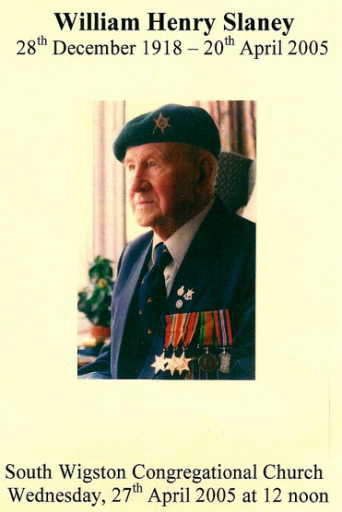
Harry died on 20 April 2005. His memorial service was held at South Wigston Congregational Church on 27 April.
Photographs
Sources
- William Henry Slaney’s wartime account, supplied with his portrait and memorial service card
- Harry Slaney’s 1989 diary, reproduced in Greater Wigston Historical Society Bulletin 49
- Leicester Mercury, 22 April 1993, p. 6